What Does it take to be an above average instructor?
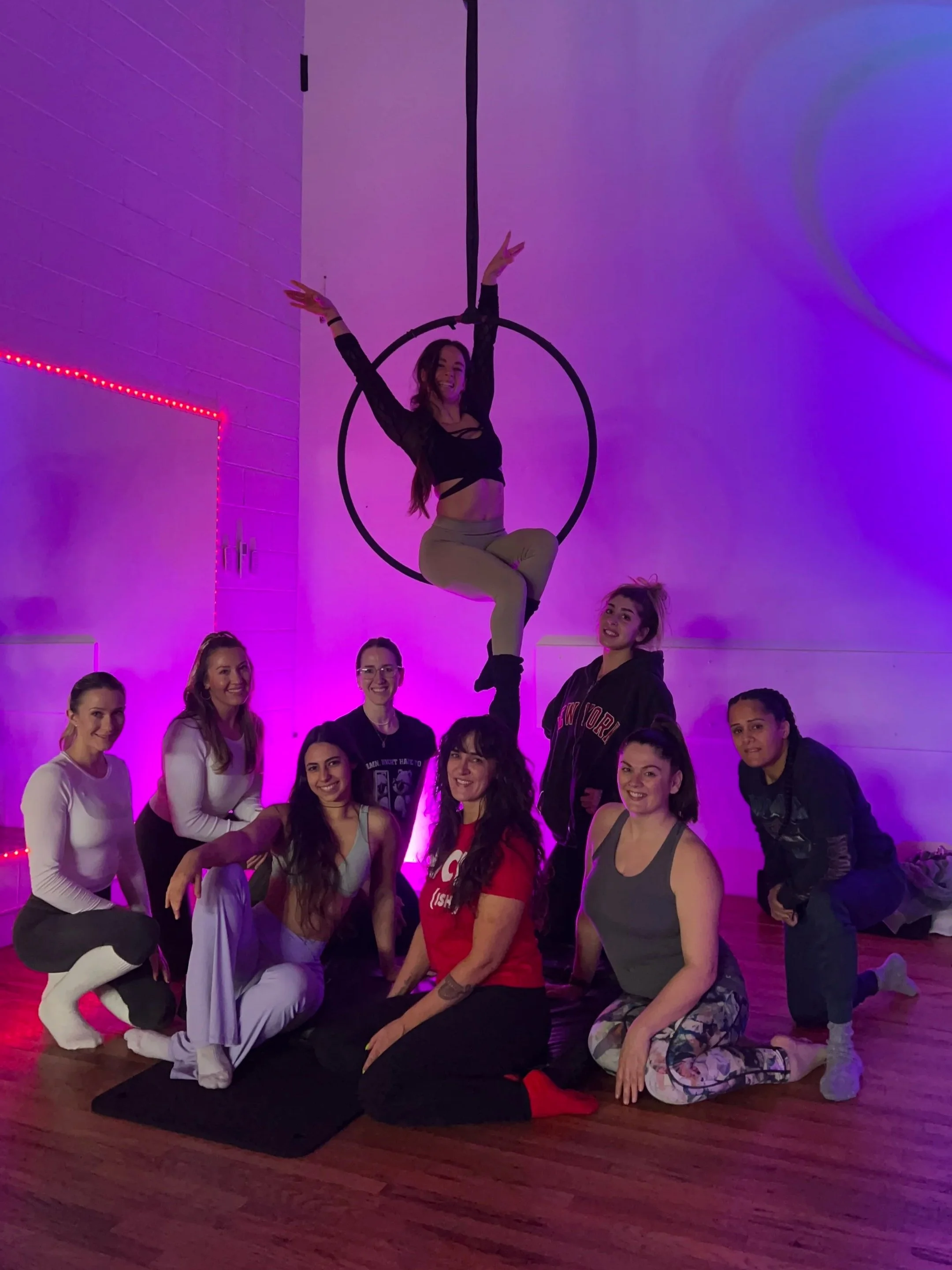
My last lyra class taught at fit factory before I moved to MA 💖😭🌷
When I was a student about 10 years ago, the pole scene was very different than it is now. The pole industry as a whole was still quite new, and all you needed to get hired as an instructor was to be able to do cool moves. That was pretty much the only prerequisite at the time 😅. Now that pole dance has gotten mainstream attention, the community has gotten bigger, which is aaaaaamazing! This is what we want. To be able to educate and reach more people and welcome them to the beautiful world of pole or aerial. To share the joy, the craft, the art, the love.
Now that we have more eyes on the community, more education is being poured into it as well. We are lucky enough to have Dr’s of PT, Physio’s, highly trained body workers and personal trainers be apart of this industry and share insightful knowledge that we just didnt have the resources to know about , or have access to. Now that we know more , all that is left is to share and apply this knowledge so that we can be the best instructors possible for our students success.
I have been a coach for about 8 years this year. I got X-pert certified after doing pole for almost 3 years. Then went on to shadow instructors for a few months, and then had an evaluation. And vuala! Instructor Katie is born 🥹 Prior to gettting into aerial I was studying for a degree in psychology. I worked in a cognitive psychology lab running EKG studies and after graduating I worked in schools with special needs kids. Prior to graduation, I was a nanny for local families, day care worker in my church, and a care taker for my little sisters (for pretty much my whole life!). After graduating highschool I would also help coach my younger sisters cheer team. So, safe to say that leadership, educating and coaching others was something I had a lot of practice in. It was the world I was apart of for most of my life! BUT, even after having all of this experience - there were still SO MANY THINGS that I had to learn by trial and error as a coach, or was lucky enough to learn from other great coaches. Coaching is fun and so rewarding for me, but it did come with many ups and downs.
My hopes are that after you read this blog is that it brings you closer to the instructor you want to be. I hope it gives you clarity and awareness in areas you have been unsure of, and that you are able to apply this knowledge to be a better coach for your students. What matters most about being a coach is that you show up, do the best with what you have, and continue to seek knowledge. We are all forever students, and honestly I learn just as much from my students as they learn from me 💖. There are many things that make someone a great coach, but this is just my condensed version. Below are 10 things I believe contribute to being an above average instructor!
You ask your students regularly how their bodies feel. Scanning for injuries prior to class can help you plan how to alter and adapt your curriculum for those students in need of it. Asking this question regularly when students are mid - move can give you insight as to whether the load distribution is correct, or if it needs to be altered. I have found that this also helps encourage autonomy, bodily awareness, and presence. It teaches them to stop and assess how they feel while they are in moves, even when you are not there to ask. (This is something we need in real life too 🫶🏼)
You tailor your warmups to what you are teaching. If you are doing the same warmup no matter what you are teaching - you are setting your students up for potential injuries. It’s ok to have certain moves you like to do regularly because they are standard helpful movement, but your warm up needs variety. It needs to be adapted to the curriculum you have planned.
You pre-plan your curriculum, and have regressions and progressions planned ahead of time. Showing up to your classes completely winging it gives me anxiety just thinking about it 😩. It’s ok to ask the class what they would like to learn sometimes if it is a small one, but you can’t always operate like that. Plans help us keep things organized, and increase success rate. I like to keep notes on my iphone of all of the moves I want to try, all of the moves I have done, and combo ideas. When it's time to get to class prep I take a look at my files on my phone and write down what I will be teaching in my curriculum notebook. I also jot down specific warmups and patterning I will be using to help keep track of it all.
You understand patterning- the importance of walking students through difficult and new pathways by working them into the warmup or class conditioning/prep. This primes their body and mind for what is to come, which can help create a higher rate of understanding of your curriculum and reduce the chance of injuries. I had a baseline understanding of patterning and did incorporate it into my classes because this is what I had to do for tumbling and flying when I was in competetive cheer, but it wasn’t until I took my certified functional strength coach training in 2025 that it was really broken down for me!
You are personable, welcoming, and encouraging to your students. Sucking at something new is sooo vulnerable; especially in pole dancing where you're wearing very little clothes in a class full of people you don’t know. Wrap all of that together with trying to look pretty while doing these movements? It’s crazy town ya’ll! So my dear fellow instructor or future instructors, please choose kindness whenever you can. Make jokes throughout the class to lighten the mood, encourage your students to be kind and realistic with themselves about their progress. Progress is never linear and we all learn at different rates. Remind them that the fact that they continue to show up is a testament to their dedication and discipline. I tell my students that most Americans are on a couch watching TV after work, and you chose to come learn how to look pretty on a metal stick 😂 Like can you get any more baddass?? The answer is nooooo
You don't teach your students something completely different and un-related every class. You understand that this sport is difficult, and there is a large learning curve because we are building strength while we learn new pathways. Repetition and progressive overload are key to ensuring your students can grow. 🌱
Your curriculum should regularly work with and cover the fundamentals of the level that you’re teaching. I’ve seen many instructors fall into the habit of only teaching moves that they like that they've seen on IG. Failing to break down core fundamentals such as shoulder mounts, brass monkeys, butterflies, crucifix, etc because they themselves get bored of teaching it. Why are you an instructor if you are not teaching what is literally needed for your students to build foundational skill and move onto the next level? The goal for me as an instructor is for my students to eventually surpass me, and if fundamentals are not on the forefront then you are not helping them grow! You may even be putting them into danger. A balance of fundamentals and taste specific moves and pathways can absolutely be found. My suggestion is choosing 3 things to work on and build upon for your curriculum. 2 foundational skills, and 1 move/combo of specific taste and fun style. A middle ground can be found for all!
You learn from other people when you can. When you do make the time to further your education and learn from others, it’s important to take time to obsorb that information and make what you learned your own within your body. Add your personality to it, mold it to you. 🧚🏼♀️ And if you are an extra kind and caring human, then you will credit the instructors from time to time that you learned from. Especially if you’re using their cues word for word that they created. Crediting who you have been inspired from or learned from will not make you look less of an artist - it will show you are working on growth and challenging yourself, and citing your sources. It’s a flex and will certainly build reputation and respect from your “elders” in the industry - which in turn could lead to connection. ☯️
You are adaptable. Sometimes, students will just not understand something the way you have explained it, even if you explained it and showed it in multiple ways. This is just something that comes with the territory of instructing. Sometimes students come who have not been in your classes so they’re not familiar with pathways you’ve been teaching. Sometimes you get strong students who progress too fast because they have strength, but lack the mind body connection. Most of the time you will be getting students after they have worked a full day or have been a mom a full day. Both absolutely exhausting tasks, and their brains may need more time to absorb what you have to say or what you are showing. My suggestion to you is to break things down as bitesized as possible, the smallest steps. And if that doesn't work, it's totally ok to scrap what you intended on working on for the day and move into something else. Perhaps there is a similar move in your repertoire that is not as difficult, and after they have mastered the regression then they will be ready for the progression. Teaching group classes is usually a dance, you will always have different energy levels and capabilities, it's your job to read the room and adapt as necessary.
You have taken the time to learn The Basics of Anatomy. Ya’ll, the amount of instructors that do not know their anatomy basics but are quite literally in the field of physical activity blows my mind… I'm sorry if this rubs someone the wrong way - but I’m going to be very honest. To me this is like a mechanic not actually knowing how cars work, they just like how the cars look. 😳 Now im not saying that you have to be on some powerhouse Dr. level type of knowledge. But you do need to learn at the very least the basics of the muscle groups that are being used the most in the movements you’re teaching. If you don’t, then how are you going to know what to put in your warm up? It’s ok to admit there is more to know. no one will ever know it all. But we are in an era of vast information, informing ourselves has never been easier honestly! For those not knowing where to start, I have some text book recommendations that I learned from and loved!
Studying for my personal trainer certification honestly helped make so many connections as well, especially because the certification that I receieved was tailored for sport specific function, so it made alot of things just *click*. If you have the time and interest, I highly recommend getting certified as a functional strength coach.
I hope you learned something today, and I hope this inspires you to stay hungry for knowledge as you evolve in your craft. 🪄 I would like to improve more on my anatomy. There is so much to learn about the body, literally so many moving parts! What is something that you would like to improve on as an instructor? Take some time to think about it, write it down, and formulate a plan. 📝
Thank you for being here 💖
With Love,
Katie Torres